
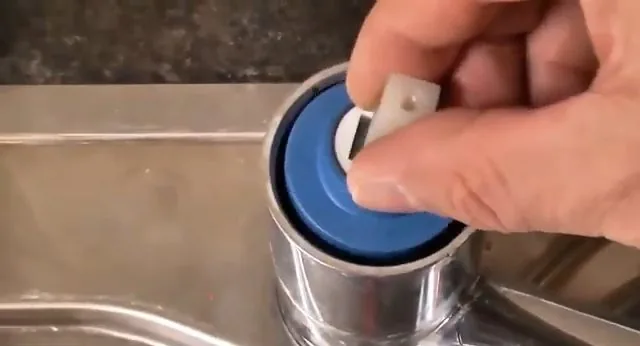
Faucet, Toilet and Fixture Repair in Broomfield, CO: Running Toilets, Dripping Faucets and Shower Valves
A fixture problem presents one decision: repair the part, or replace the whole fixture. A worn washer or flapper is a quick repair. A corroded faucet body, a cracked toilet bowl or a shower valve that no longer shuts off tight is usually better replaced. This page sorts the common cases by what you can see, so you know which one you have before the plumber arrives. Call our dispatch line when you are ready.
Book a fixture repairFixture trouble?
(303) 567-7524Name the fixture and what it does, and a plumber who handles fixture work gets your address.
- Close the shutoff valve under the fixture if it leaks.
- Note the brand or model if you can read it.
- Take a photo of the drip or the part.
Repair or replace the fixture? A decision table
Parts wear out at different rates. Rubber washers and flappers last a few years, while the metal body and ceramic last decades. Pick the row that matches what you see.
| Fixture and symptom | Usually a repair when | Usually a replacement when |
|---|---|---|
| Faucet that drips from the spout | A cartridge, washer or seat is worn and the body is clean | The body is pitted, the finish has failed or parts are no longer made |
| Faucet that leaks at the base or handle | An O-ring or packing nut needs replacing | Corrosion has eaten the threads |
| Toilet that runs or refills on its own | The flapper, fill valve or chain is the fault | The bowl or tank is cracked, or it clogs constantly |
| Shower that drips or will not hold temperature | The cartridge or a trim seal has failed | The valve body is corroded or the wall behind is wet |
| Kitchen or bathroom sink drain that leaks | A slip nut or gasket has loosened | The trap or tailpiece is split or heavily corroded |
| Supply stop or angle valve that weeps | The packing nut can be tightened | The valve is stiff, crusty or will not close fully |
If you are weighing a new fixture anyway, ask the plumber for the compatible parts list before you buy. A mismatch in rough-in dimensions is the most common cause of a second visit.
A toilet that keeps running: flapper, fill valve or a leak you cannot see
A running toilet wastes water quietly. Lift the tank lid and watch what happens after a flush, because the sequence points to the cause.
- The tank refills, stops, then refills again with no one near it. The flapper is not sealing, so water leaks into the bowl. Check that the chain is not too tight or too loose and that the rubber seats flat.
- Water keeps flowing into the overflow tube. The fill valve or float is set too high or has failed.
- A hissing sound after the tank is full. The fill valve is not shutting off completely.
- Water on the floor around the base. The wax ring or the tank bolts are leaking. Stop using the toilet and call.
- A toilet that clogs repeatedly. That is a drain question; see clearing a stubborn line before you replace the bowl.
Most flapper and fill valve repairs take a short visit. A plumber can also replace a worn supply line and shutoff while the tank is open.
Not sure whether to mend or swap?
Describe the fixture, its age and what it does. A plumber can tell you on the call whether a repair is likely to hold.
Faucets, shower valves and supply stops: what actually fails
A faucet has few moving parts, and nearly every failure comes down to a seal, a cartridge or a corroded connection.
| Part | What it does | Typical failure |
|---|---|---|
| Cartridge or valve stem | Controls flow and mixes hot and cold | Scale or wear lets water pass; the handle feels loose or gritty |
| Aerator | Adds air and shapes the stream | Clogs with grit and scale, so flow drops |
| Supply stop (angle valve) | Shuts water to one fixture | Corrodes shut or weeps at the stem; replacing it is routine |
| Supply line | A short flexible hose to the faucet or toilet | Splits or bursts at the crimp; replace in pairs |
| Shower valve and trim | Mixes water behind the wall | Cartridge wear, or a seal that no longer holds temperature |
| Showerhead and arm | Delivers the spray | Clogged nozzles, or a leaking threaded joint at the wall |
Broomfield’s 2025 water report lists hardness from 25 to 130 parts per million, soft to moderate. Scale still builds slowly on aerators and showerheads; soaking them in vinegar clears light deposits. A shower pipe that leaks at the wall, or a stop that will not close, is a plumber’s call.
Tubs, sinks and vanities: replacing, installing and roughing in
Replacing a tub or converting a tub to a shower involves the drain, the valve and the wall behind them. A bathroom sink or vanity is simpler, but the supply stops and trap often need replacing at the same time. A kitchen sink swap includes the faucet, the disposal connection and the dishwasher line; disposal jams, leaks and replacements have their own page.
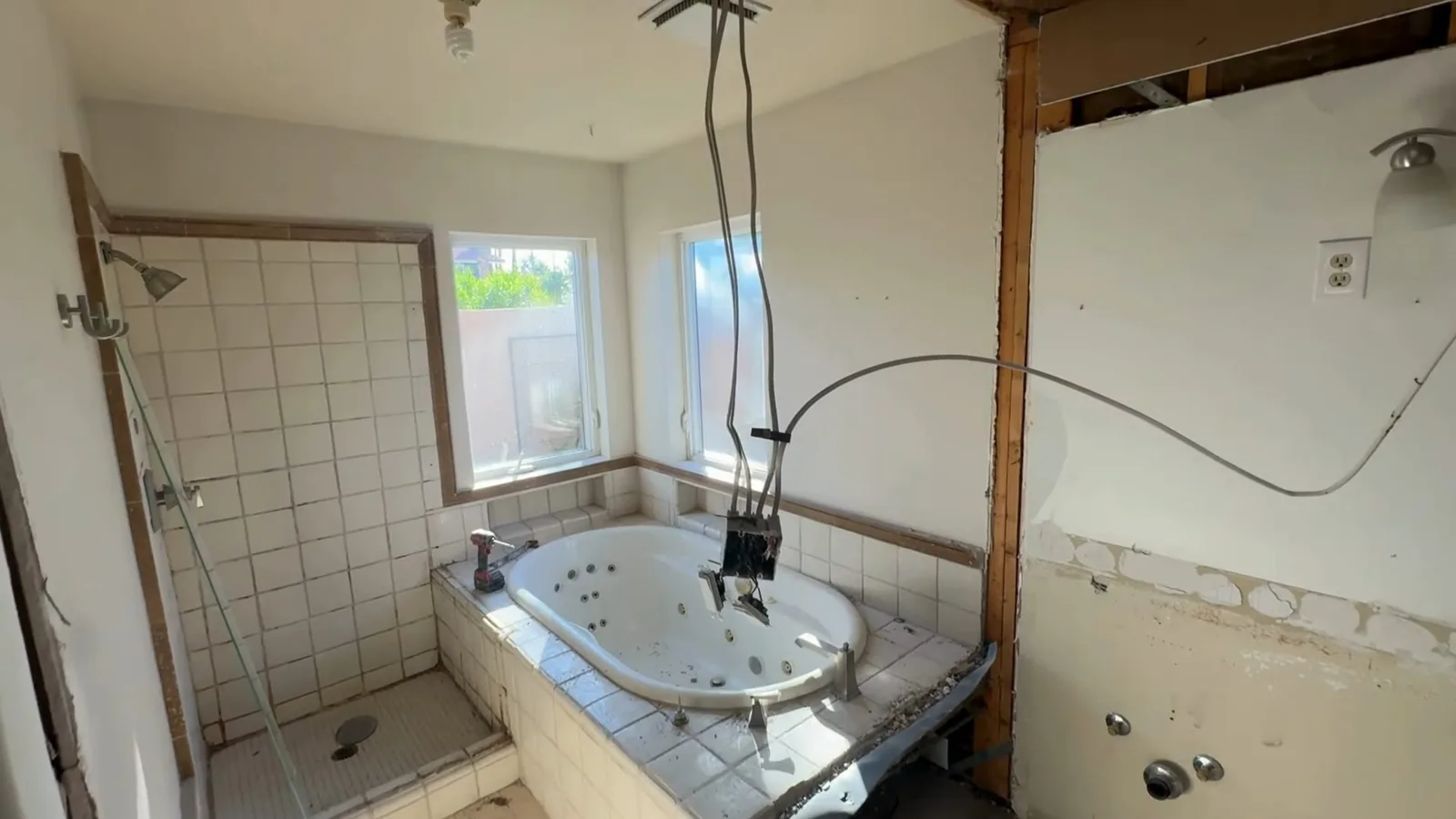
Bathroom remodeling plumbing, bathtub installation and new construction plumbing for an addition all start from the same rough-in plan. Remodel and rough-in work, such as toilet relocation and installation, tub-to-shower conversion plumbing, adding an ADU bathroom, a wet bar, a laundry room or a dual-flush toilet, starts with where the drain and vent can run. Ask for the rough-in dimensions and the vent plan on paper before you order fixtures.
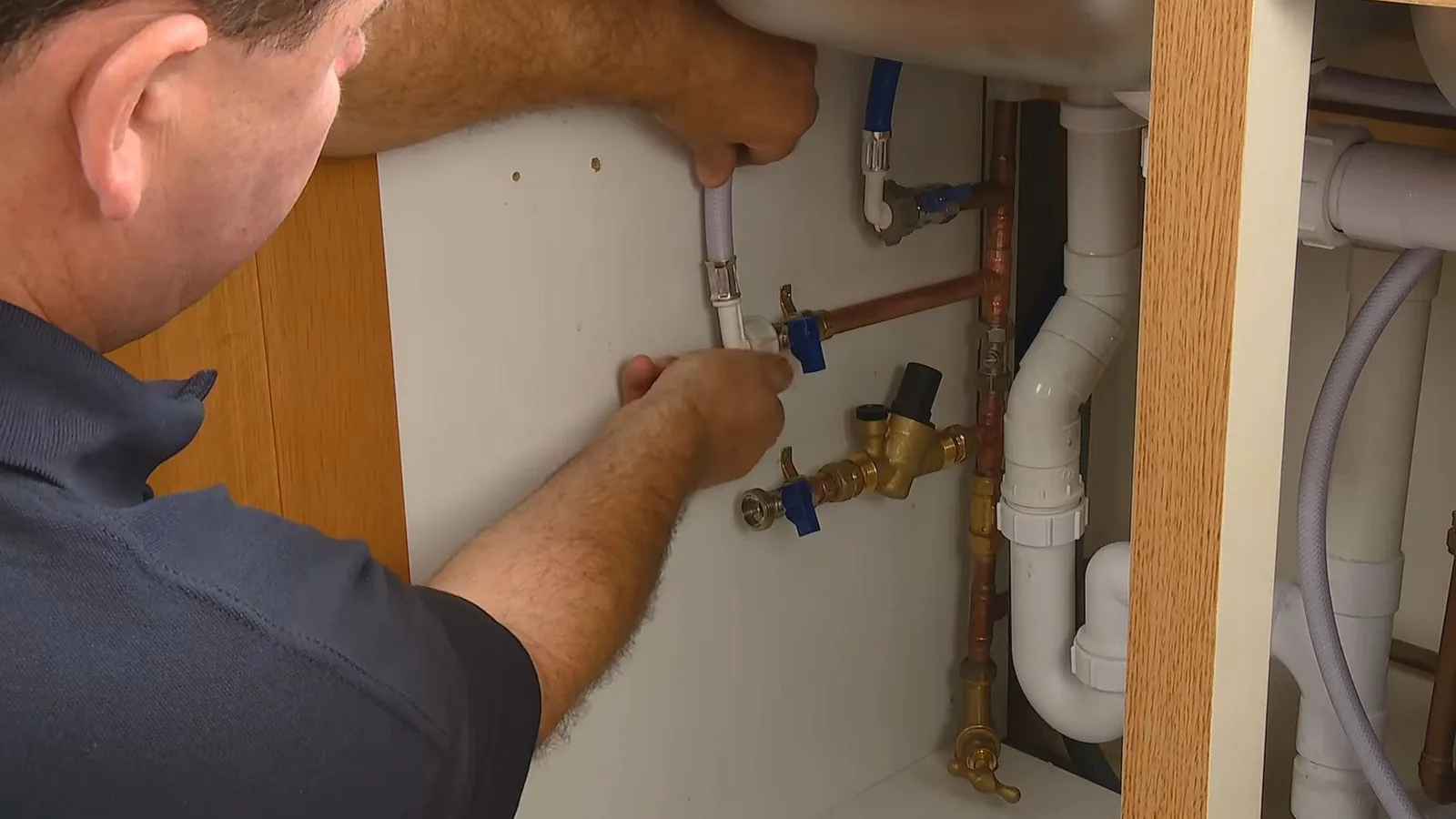
Appliance hookups, the washer, dishwasher and ice maker connections, belong on the same visit as fixture work when possible. A bidet is a small addition that needs a hot and cold or a cold-only supply and an electrical outlet nearby for the powered kind.
Outdoor faucets and when a repair becomes a permit question
A hose bib that drips only when the hose is attached usually needs a new vacuum breaker or washer. One that drips from the handle needs packing. A frost-proof sillcock that leaks inside the wall after a freeze needs replacing, so turn off and empty outdoor spigots ahead of the first deep freeze and keep hoses disconnected.
Most fixture swaps need no permit. A change to drain or supply piping, such as moving a toilet, can. Ask the plumber whether the work needs one, and ask which licenses the plumber works under for the job.
Fixture repair questions
My toilet shutoff valve is leaking. Can it be replaced?
Yes. A plumber closes the main valve, removes the old stop, fits a new one and a new supply line, then tests for drips. The job is brief unless the pipe behind it is corroded.
Why does my toilet keep running?
The flapper is not sealing, the fill valve is not shutting off or the float is set too high. A faint trickle that restarts the fill every few minutes is the flapper in most cases.
Can you handle remodel and rough-in plumbing for a new bathroom?
Yes. Share the layout and the fixtures you plan to use. The plumber confirms drain and vent paths, supply routing and whether a permit applies before work starts.
Can a plumber fix my shower?
Yes. Dripping heads, a valve that will not hold temperature and leaks at the wall are all plumbing repairs. If the wall behind the valve is wet, say so on the call, because that changes the visit.
A tap that will not stop or a toilet that will not stop running?
Tell the dispatcher which fixture it is and what it does. A small repair is quoted the same way as a replacement, so you can choose.
Call (303) 567-7524