
Hard Water in Broomfield: Water Softener and Filtration Choices, Signs to Look For and What to Test First
Hard water is often blamed for every spot on a glass and every stiff towel, and a softener is often sold as the cure. In Broomfield the picture is more modest: the city reports water that runs from soft to moderate, and a filter solves a different problem from a softener. Deciding which equipment fits starts with what you actually notice and what a test shows. Call our dispatch line to talk it through.
Ask about water treatmentWater treatment help
(303) 567-7524Say whether you want hardness, taste or a repair, and the dispatcher finds a plumber for water conditioning work.
- Note scale on fixtures or glassware.
- Know the age and make of any existing unit.
- Have a test result handy if you have one.
Softener, filter or reverse osmosis? Each one solves a different problem
The three are often lumped together, but they treat different things. Choosing wrongly is the common mistake.
| System | What it addresses | What it does not do |
|---|---|---|
| Water softener | Hardness: calcium and magnesium that cause scale and soap film | It does not remove chlorine taste or contaminants |
| Whole-house filter | Sediment, chlorine taste and odor, depending on the media | It does not soften water |
| Under-sink filter | Drinking and cooking water at one tap, including taste and some contaminants | It does not treat the whole house |
| Reverse osmosis (RO) | Many dissolved substances at one tap, removed through a membrane | It uses a drain connection and wastes some water, and it does not soften the house |
| Water conditioner (non-salt) | Changes how scale forms, without removing hardness | Results vary, and it is not a softener |
If the complaint is taste, start with a filter. If it is scale and spotting, a softener is the likelier tool. If both, you may want two systems.
Signs of hard water, and why a test comes before a purchase
In the 2025 water report the city lists hardness at 25 to 130 ppm, or about 1.5 to 7.3 gpg, on a scale where under 50 counts as soft and over 150 as hard. Supply comes both from Broomfield’s treatment plant and from Denver Water, which can blend, so your tap may sit at either end of that range.
- White scale on faucet tips and around the showerhead.
- Spots on glasses that return after the dishwasher.
- Soap that does not lather well, and a film on shower doors.
- A water heater that rumbles from sediment.
- Dry skin or stiff laundry, which has many causes and is not proof of hardness.
A home test strip or a lab test shows your actual hardness. At the soft end of Broomfield’s range, a softener is hard to justify; at the upper end, it may be worth having. The report contains no softener advice, and we are not offering any beyond this.
Want a plumber to test your water and size the equipment?
Describe the scale you see and any taste complaints. A plumber who installs treatment systems can advise on the call.
Installing a softener or a whole-house filter
Both go on the main water line, usually near where it enters the house. The job includes the connections, a bypass valve so the unit can be isolated, and a drain for a softener’s regeneration water.
- Test the water. Know your hardness and any taste or sediment problem.
- Pick a location. Near the main, with a floor drain or standpipe and an outlet close by.
- Plumb in with a bypass. Shutoffs allow the unit to be serviced without cutting off the house.
- Set up and start. A softener is programmed to your hardness; a filter is flushed to remove fines.
- Keep the records. Save the model, the settings and the first service date.
Colorado’s HB24-1344 changed the rules for water conditioning work: licensed plumbers need no separate water conditioning registration, while others who install equipment must register. Ask who is installing and what they hold. A softener paired with a tank heater changes the flushing needs; tank heater diagnosis covers that side. Broomfield also licenses plumbing contractors, so ask whether a city contractor license applies.
Salt, brine and regeneration: what to know and what we cannot say
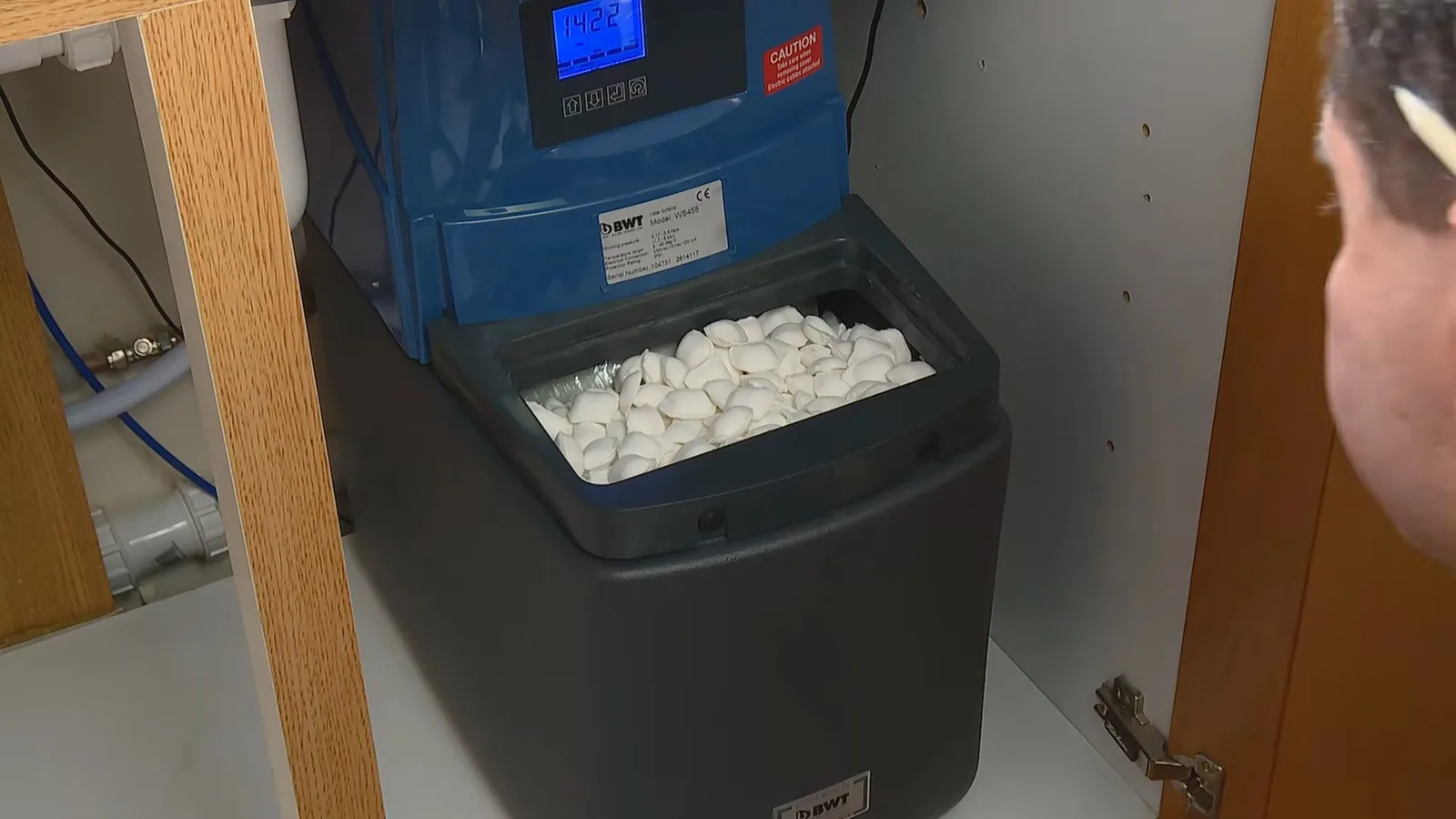
A salt-based softener regenerates by flushing brine through resin beads, and the used brine goes down a drain. How often that happens depends on the unit, the hardness and your usage.
We found no Broomfield rule that restricts softener discharge, and no rule that allows it. This page makes no claim either way. If you are worried, ask the city’s utility staff or the installer before you buy, and do not discharge brine anywhere other than a proper drain connection.
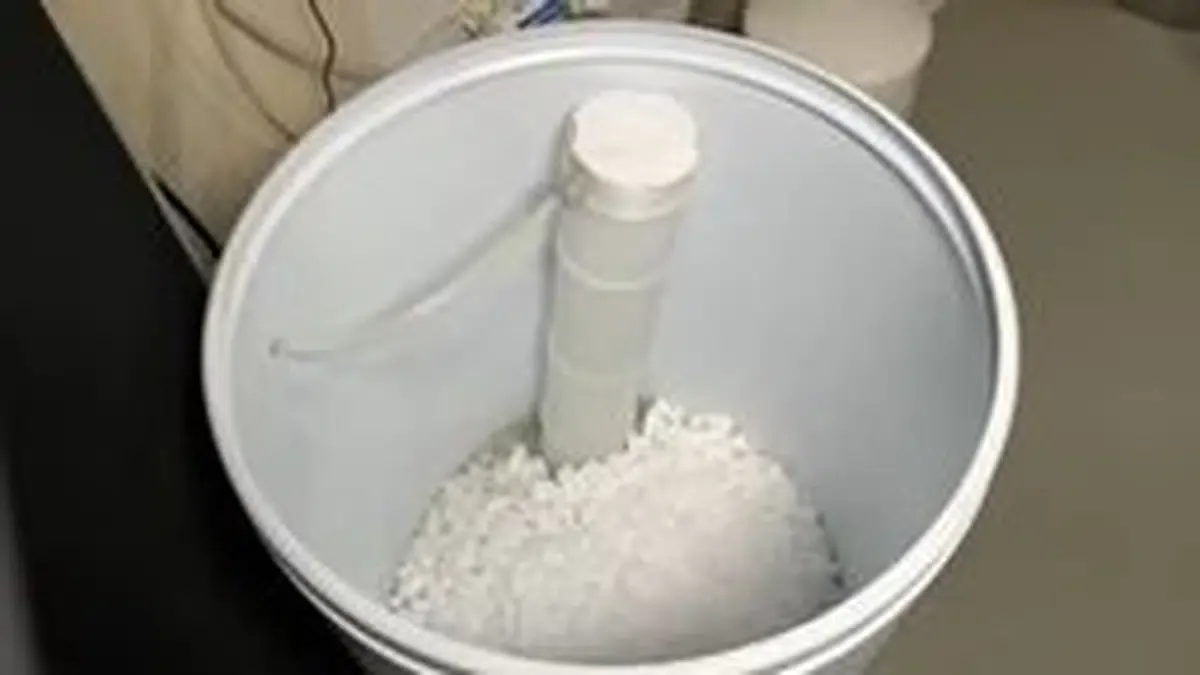
Keep the brine tank stocked with the salt the manufacturer names. A bridged crust of salt, a tank that looks full but has no brine, is a common reason a softener stops working.
Under-sink filters, reverse osmosis and replacing cartridges
An under-sink filter has cartridges that wear out. Replace them on the maker’s schedule, because an exhausted cartridge stops filtering and can pass what it caught. Reverse osmosis units add a membrane and a storage tank, plus a drain saddle on the sink drain, and they also need periodic changes.
- A drop in flow at the filter tap usually means a clogged cartridge.
- A refrigerator or ice maker line uses its own filter; replace it separately.
- A slow RO tap can be a failing membrane or a low-pressure storage tank.
- A tap that runs with an unusual noise after a change may have air in the line.
Repairing or replacing an older softener or water conditioner
Most softener faults are in the control valve, the resin or the brine system. A plumber checks the valve first, because a worn valve can sometimes be rebuilt or replaced without changing the tank.
| Symptom | Likely cause | Repair or replace |
|---|---|---|
| Hard water returns | No salt, a bridged brine tank, a failed valve or exhausted resin | Often repairable |
| Water pools around the tank | An overflow, a leaking valve or a clogged drain line | Repair the valve or the drain |
| Salty taste in the water | A valve that does not rinse properly | Repair or replace the valve |
| A unit over 15 years old with repeated faults | Worn resin and valve components | Replace |
| An overflow with a fridge line connected | A failed valve or a clogged brine line | Repair the valve and check the fridge connection |
A valve replacement or reinstall means isolating the unit, replacing the head, reconnecting and reprogramming. Ask for the old parts back if you want proof of what was changed.
Water softener and filter questions
How do I know if I have hard water, and should I test it?
Scale on fixtures, spots on glass and a film on shower doors are the usual signs. A test strip or lab test gives your actual number. Broomfield’s reported range is soft to moderate, so test before you buy equipment.
Is a water softener or a filter better for my home?
A softener treats hardness and a filter treats taste, sediment and contaminants. They are not interchangeable. If you want both, a plumber can set up the two in order on the main line.
My water softener is overflowing and the fridge line is leaking. What do I do?
Isolate the softener with its bypass, close the fridge supply and call. An overflow points to a valve or drain line fault, and the fridge connection should be checked separately.
Can you repair a water conditioner?
Often yes. The control valve, the brine system or the resin can be serviced or replaced. A plumber diagnoses which part has failed and tells you whether repair is sensible for the unit’s age.
Can you replace the valve on my softener or reinstall it?
Yes. The plumber isolates the unit, replaces or reinstalls the valve, reconnects the lines and reprograms the settings. A reinstall after a move or a remodel follows the same steps.
A softener that stopped working, or hard water you want to fix?
Explain what you have and what it does. The plumber can usually say on the call whether the fix is a repair or a new unit.
Call (303) 567-7524